Skills :
Pyschometrics, Technical Writing, Test Construction, Psychological Experiment.Tools :
Google SuitesWhat is the test about?
Creativity is needed in many, if not all, aspects of life. In many sectors, it's the component that takes us further toward the next step of problem solving iterations. E. Paul Torrance defined creativity as a process. Creative thinking takes place in the process of sensing gaps and problems in life, making guesses or formulating hypotheses about these problems, retesting as well as modifying them and finally communicating the result. Given the importance of creativity in navigating life as well as in sustaining economic growth, we were interested in developing a test that could measure the intricacy of individual creative process. This test measures the verbal creativity, someone's creative capability expressed through verbal content.
The Background
E. Paul Torrance was a pioneer in creativity research and education for more than 50 years. He developed the creativity test called Torrance Test of Creative Thinking (TTCT).
TTCT is not operated under the comprehensive definition as stated by Torrance (Chase, 1985). Torrance made no statement that the test itself can be used to assess all dimensions of creativity or to even suggest the test be used as the sole basis for decision making (Treffinger, 1985). TTCT score doesn't guarantee it will be translated into behavior. With this disclaimer in mind, the framework of creativity and structure of TTCT given by Torrance could still offer a great value to be used for adaption.
Test Specification
This test is composed of 2 sub-tests. Sub- test A consists of 10 items and sub-test B consists of 5 items. The difference between the two sub-sets lies in the type of stimulus given to test takers. Sub-test A is made up of verbal items and sub-test B contains graphic items. Responses to these items are written by the test takers and assessed by testers based on the dimensions of creativity under Torrance's framework: fluency, flexibility, and originality. Empirical evidence of the reliability and validity of this test is provided in the manual.
Verbal Creativity level derived from the score in this test ranges from Expressive to Emergent with scores between 50 and 55.
Purpose of The Test
This test can be used in educational setting as well as the industry especially in the copywriting and editing field. Hiring managers can utilize the test to select candidates for the job fit, educators can use the test to map students' creative skill, and researchers can also use the test for further studies in creative thinking.
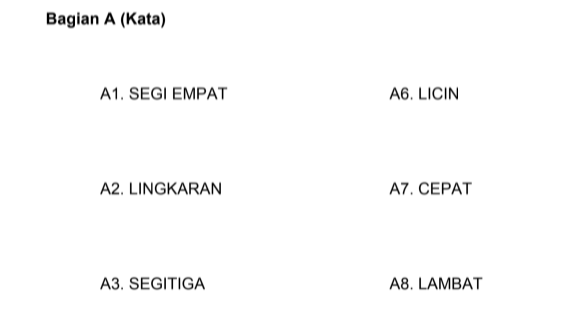 Figure 1: Test Item Example - Verbal
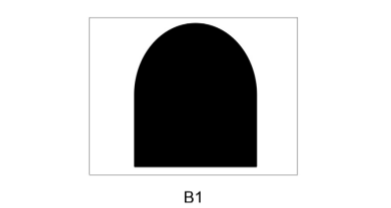 Figure 2: Test Item Example - Graphic